
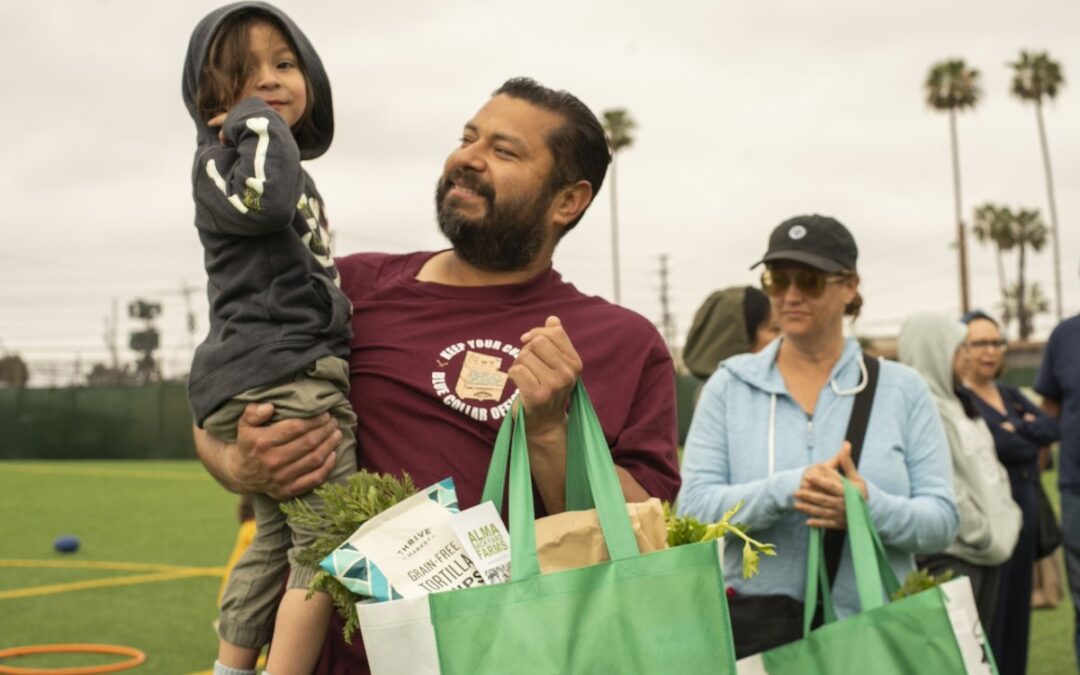
Hunger in Los Angeles isn’t a resource problem—it’s a systems problem. Every day, millions of pounds of perfectly good food are wasted while one in four households struggle to put meals on the table. That isn’t just inefficient; it’s an opportunity to do better.
At FoodCycle, we believe the solution isn’t simply more charity—it’s smarter collaboration. By rescuing surplus food and redirecting it to our nonprofit partners, we can nourish our neighbors, reduce waste, and build a more resilient food system.
In this article, we’ll challenge five common myths about hunger and explore how shifting from a charity mindset to one of food justice can create lasting change. Together, we can feed people—not landfills.
Key Takeaways
- Stop viewing hunger as a lack of food and start seeing it as a logistics challenge we have the power to solve together.
- See why feeding people is six times more impactful than composting edible surplus, making food recovery a win for both the community and the planet.
- Discover how grassroots, tech-enabled food insecurity solutions are closing the gaps that traditional large-scale charities often miss.
- Learn to move beyond the charity narrative toward a justice mindset that treats nourishment as a fundamental human right rather than a gift.
- Find out how your own imagination and community participation can fuel a resilient, self-sustaining food system for every neighbor.
- Table of Contents
- Hunger Isn’t a Scarcity Problem
- From Charity to Food Justice
- Why Food Rescue Works
- Building a Stronger Food System Together
- How You Can Help
1. Hunger Isn’t a Scarcity Problem
Los Angeles doesn’t lack food—it struggles to get good food to the people who need it most. Every day, businesses have perfectly edible surplus while families across our communities face food insecurity.
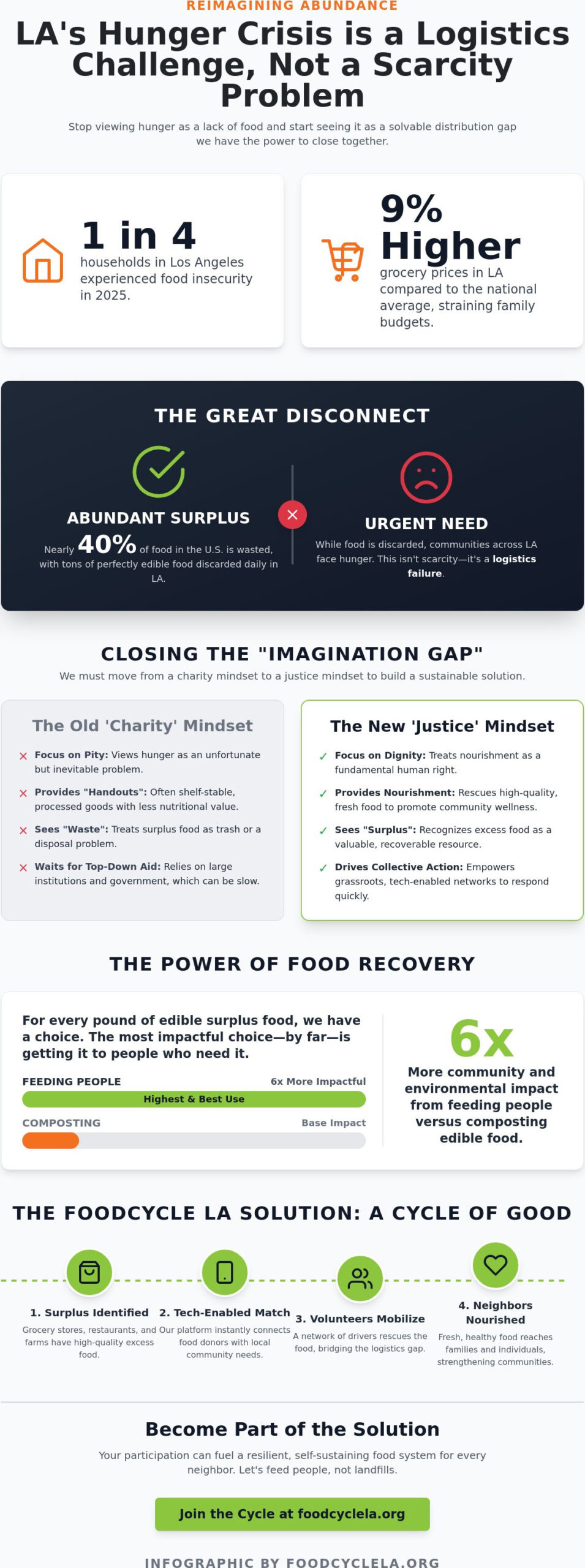
Nearly 40% of food in the United States goes uneaten, yet one in four Los Angeles households experienced food insecurity in 2025. That isn’t a shortage of resources—it’s a failure of distribution.
At FoodCycle, we believe surplus food should never become waste when it can nourish our neighbors. By connecting businesses with nonprofit partners, we rescue fresh food before it reaches the landfill and deliver it where it can have immediate impact.
This isn’t simply about reducing waste. It’s about creating a smarter, more equitable food system that benefits people, communities, and the environment.
The Cost of Wasted Food
When edible food ends up in landfills, we lose far more than a meal. We waste the water, energy, labor, and farmland used to produce it while creating methane emissions that accelerate climate change.
Food recovery solves two problems at once—reducing waste while increasing access to healthy food.
2. From Charity to Food Justice
Ending hunger requires more than generosity. It requires rethinking how our food system works.
Traditional emergency food programs play an important role, but they cannot solve the underlying disconnect between surplus and need. Food recovery offers another solution—one that captures existing food before it is wasted and redirects it into communities.
Just as importantly, it provides fresh produce, dairy, proteins, and prepared foods that support health and dignity. Everyone deserves access to nutritious food, regardless of where they live.
This work succeeds because of collaboration. Businesses donate surplus, volunteers rescue it, nonprofit partners distribute it, and supporters make the entire system possible. Together, we’re building a food system that values nourishment over waste.
3. Why Food Rescue Works
Food recovery is one of the most effective ways to fight both hunger and climate change.
Instead of producing more food, we start with the abundance that already exists. Every day, grocery stores, restaurants, caterers, farmers markets, and food manufacturers have fresh, nutritious food they cannot sell—but that is still perfectly safe to eat. FoodCycle rescues that surplus and delivers it to local nonprofit partners, often within hours.
Since 2019, FoodCycle has rescued more than 33 million pounds of food, providing the equivalent of more than 27 million meals while keeping millions of pounds of organic waste out of landfills.
Better for People. Better for the Planet.
Feeding people is the highest and best use of edible food. While composting plays an important role for food that is no longer edible, rescuing surplus food creates far greater environmental and community benefits.
Every pound of food recovered helps reduce methane emissions, conserves the water and energy used to produce that food, and provides fresh, healthy meals to neighbors experiencing food insecurity.
Businesses Are Part of the Solution
California’s SB 1383 requires many businesses to recover edible food rather than dispose of it. FoodCycle helps businesses meet those requirements through simple, reliable food recovery programs that create measurable community impact.
Federal and California Good Samaritan laws also protect businesses that donate food in good faith, making donation both safe and easy.
4. Building a Stronger Food System Together
Ending hunger takes more than food—it takes collaboration.
FoodCycle brings together businesses, volunteers, nonprofit organizations, cities, and community leaders to build a food recovery network that works for everyone. Instead of relying on a single warehouse or distribution center, we connect surplus food directly to the organizations serving their communities every day.
Technology helps make that possible. Real-time logistics allow us to match donations with nearby nonprofit partners, reduce transportation time, and ensure fresh food reaches families while it is still at peak quality.
This community-based approach also strengthens local organizations that understand the unique cultural, dietary, and nutritional needs of the people they serve.
Together, we’re creating a food system that is more resilient, more sustainable, and better prepared to respond to both everyday needs and future emergencies.
5. How You Can Help
Everyone has a role to play in building a food system where good food nourishes people instead of filling landfills.
Whether you volunteer, donate, become a corporate partner, or simply help spread awareness, your support helps rescue more food and strengthen communities across Los Angeles County.
Volunteer
Help rescue surplus food from local businesses and deliver it to nonprofit partners. Even a single volunteer shift can provide hundreds of meals.
Donate
Financial contributions keep our rescue vehicles on the road, support our logistics technology, and allow us to expand food recovery throughout Los Angeles County.
Partner With Us
Businesses can turn surplus food into community impact while meeting sustainability and SB 1383 goals. Corporate volunteer events and sponsorships also give teams a meaningful way to make a difference together.
Together, we’re proving that hunger isn’t inevitable. By rescuing food, reducing waste, and strengthening community partnerships, we can build a healthier and more equitable Los Angeles.
Join FoodCycle in feeding people—not landfills.
Frequently Asked Questions
Is food insecurity really a problem in Los Angeles?
Yes. One in four Los Angeles households experienced food insecurity in 2025, even as millions of pounds of edible food were discarded.
How does food rescue help?
Food rescue redirects fresh, surplus food from businesses to nonprofit organizations instead of landfills, providing healthy meals while reducing food waste.
Can businesses donate food safely?
Yes. The federal Bill Emerson Good Samaritan Food Donation Act and California law protect businesses that donate food in good faith.
How is food rescue different from a food bank?
Food banks primarily store and distribute donated food. Food rescue focuses on quickly recovering fresh surplus food and delivering it directly to community partners before it goes to waste.
Is donating food better than composting?
Yes. For edible food, feeding people is the highest and best use. Composting remains important for food that is no longer safe to eat.
**
**
How can I support FoodCycle?
You can volunteer, make a financial contribution, organize a corporate volunteer event, sponsor our work, or become a food donor if your business has surplus food.