
Turn Surplus Food into Community Impact with FoodCycle
Every day, businesses across Los Angeles have high-quality surplus food that is perfectly safe to eat but cannot be sold. At the same time, thousands of families rely on local nonprofit organizations for access to fresh, nutritious food.
FoodCycle bridges that gap.
As one of Southern California’s leading food recovery organizations, FoodCycle has rescued more than 33 million pounds of surplus food by connecting businesses with a network of more than 250 nonprofit partners throughout Greater Los Angeles. Our goal is simple: keep good food out of landfills and put it on the tables of people who need it most.
Whether you operate a grocery store, restaurant, hotel, corporate cafeteria, food manufacturer, distributor, or event venue, establishing a food donation program is easier than you may think. FoodCycle manages the logistics, provides ongoing support, and helps your business meet California’s edible food recovery requirements.
Key Takeaways
- Donating surplus food reduces waste while supporting local communities.
- FoodCycle makes food donation simple by coordinating pickups, transportation, and nonprofit distribution.
- We help businesses comply with California’s SB 1383 edible food recovery requirements.
- Businesses receive documentation for reporting and tax purposes.
- Every donation helps reduce greenhouse gas emissions while providing healthy food to neighbors experiencing food insecurity.
Why Food Donation Matters
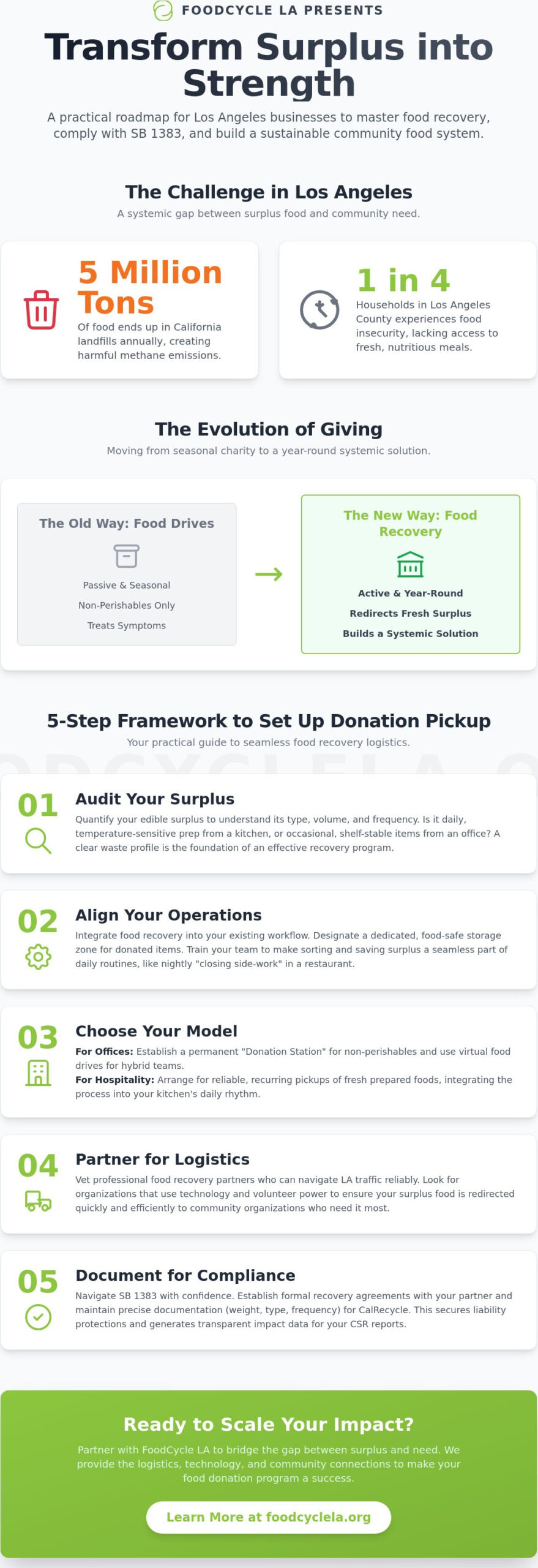
California throws away millions of tons of edible food every year, while many households struggle to access nutritious meals. Recovering surplus food is one of the most effective ways businesses can make a measurable environmental and social impact.
When edible food is recovered instead of discarded, businesses can:
- Reduce disposal costs
- Support local nonprofit organizations
- Reduce methane emissions from landfills
- Demonstrate sustainability leadership
- Meet SB 1383 edible food recovery requirements
Food donation isn’t simply about reducing waste—it’s about strengthening communities.
Why Businesses Choose FoodCycle
FoodCycle has spent years building one of the region’s largest food recovery networks. We understand that every business operates differently, which is why we tailor our donation programs to fit your workflow.
Our team will:
- Visit your location and assess your donation opportunities
- Help develop simple food recovery procedures
- Train staff on safe food donation practices
- Coordinate transportation and pickup schedules
- Match donations with appropriate nonprofit partners
- Provide documentation to support SB 1383 compliance
- Continue supporting your program as your donation volume grows
Rather than asking your staff to figure out the logistics, FoodCycle becomes an extension of your sustainability team.
What Foods Can Be Donated?
FoodCycle accepts a wide variety of wholesome surplus food, including:
- Fresh produce
- Dairy products
- Meat and seafood
- Prepared foods
- Bakery items
- Frozen foods
- Shelf-stable products
- Beverages
Every donation is evaluated according to food safety standards and matched with nonprofit organizations that can distribute it quickly and safely.
SB 1383 Compliance Made Simple
California’s SB 1383 requires many businesses to recover edible food that would otherwise be discarded.
FoodCycle helps businesses comply by providing:
- Written food recovery agreements
- Scheduled pickups
- Documentation of donated food
- Monthly reporting
- Ongoing communication and support
- Guidance during implementation
Our team works with businesses and local jurisdictions throughout Greater Los Angeles to build practical, sustainable food recovery programs that satisfy regulatory requirements while minimizing disruption to daily operations.
More Than Pickup—A Complete Food Recovery Partner
FoodCycle does much more than collect food.
Our organization operates seven days a week across Greater Los Angeles using professional staff, refrigerated vehicles, trained volunteers, and technology that allows us to efficiently match donations with nonprofit partners.
We also use the Careit platform to document donations, simplify reporting, and provide transparency for businesses participating in edible food recovery programs.
Our network includes more than 500 food donors, ranging from neighborhood restaurants to regional grocery chains and food manufacturers.
Real Partnerships. Real Results.
FoodCycle works with businesses throughout Los Angeles to build long-term food recovery programs.
Erewhon
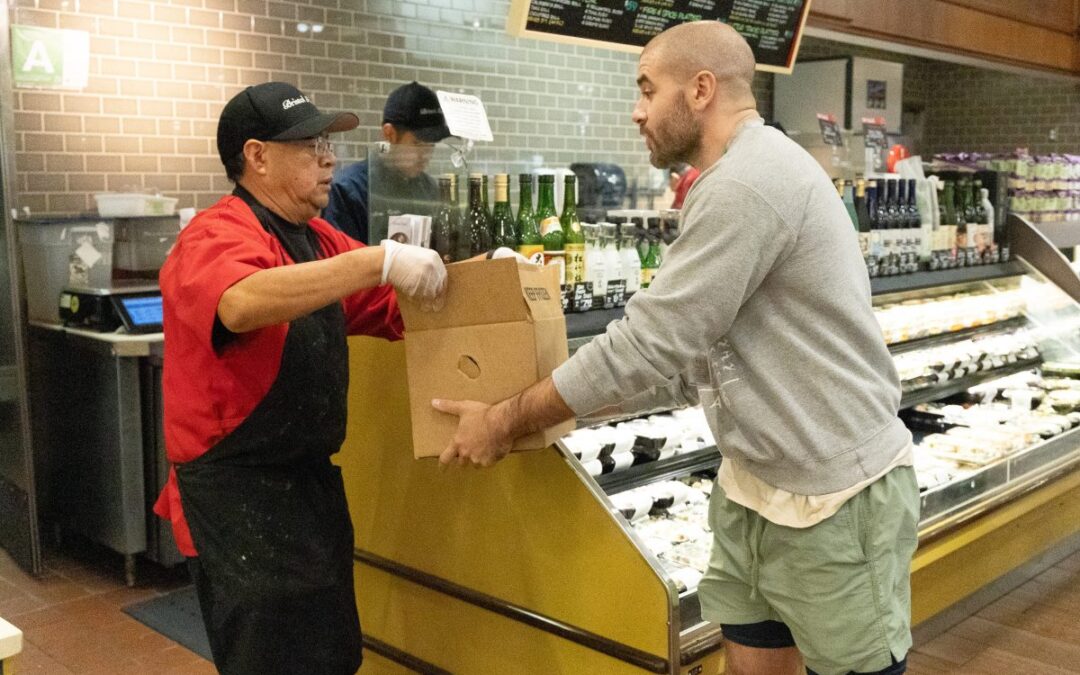
FoodCycle partnered with Erewhon to create an efficient warehouse aggregation program that allows food from multiple stores to be consolidated and redistributed to nonprofit organizations. Since the partnership began, FoodCycle has recovered more than 245,000 pounds of food, significantly expanding the amount of fresh food reaching communities throughout Los Angeles.
Whole Foods Market
FoodCycle has partnered with Whole Foods Market for years, supporting food recovery from multiple locations while also participating in new store openings and community events that educate the public about food recovery and sustainability.
Restaurants, Caterers, Hotels, and Manufacturers
Whether donations occur every day or only after special events, FoodCycle develops pickup schedules that work for each business while ensuring surplus food reaches nonprofit organizations quickly and safely.
The Environmental Impact
Food recovery is one of the simplest ways businesses can reduce their environmental footprint.
Keeping edible food out of landfills helps reduce methane emissions while conserving the water, energy, labor, and transportation resources that went into producing that food.
Every pound recovered benefits both people and the planet.
Getting Started Is Easy
Starting a food donation program doesn’t require major operational changes.
Our team will guide you through the process from beginning to end.
- Contact FoodCycle.
- Meet with our team to discuss your operations.
- Develop a pickup schedule that fits your business.
- Train your staff.
- Begin donating surplus food and tracking your impact.
Most businesses are surprised by how simple the process becomes once the right systems are in place.
Frequently Asked Questions
What businesses can partner with FoodCycle?
We work with grocery stores, restaurants, hotels, corporate cafeterias, manufacturers, distributors, farmers markets, event venues, schools, and many other food businesses.
What foods can be donated?
Most wholesome surplus food can be donated, including fresh produce, prepared meals, dairy products, baked goods, frozen foods, and packaged items that meet food safety standards.
Does FoodCycle help with SB 1383 compliance?
Yes. We provide food recovery agreements, documentation, reporting, and ongoing support to help businesses meet California’s edible food recovery requirements.
Is donated food protected from liability?
Yes. Federal and California Good Samaritan food donation laws provide important liability protections for businesses donating food in good faith.
How are donations tracked?
FoodCycle uses the Careit platform to document donations and provide reporting that supports both SB 1383 compliance and organizational sustainability reporting.
Is there a minimum donation size?
Not necessarily. We work with businesses of many sizes and can recommend the best recovery approach based on the type and frequency of available surplus food.
Partner with FoodCycle
Every day, businesses have an opportunity to transform surplus food into meals for families throughout Greater Los Angeles.
FoodCycle makes that process simple.
From staff training and transportation to compliance support and impact reporting, we help businesses build food recovery programs that are practical, sustainable, and meaningful.
Together, we can reduce food waste, strengthen our communities, and ensure that good food feeds people—not landfills.
Ready to get started? Contact FoodCycle today to schedule a consultation and learn how your business can become part of Los Angeles’ growing food recovery network.