
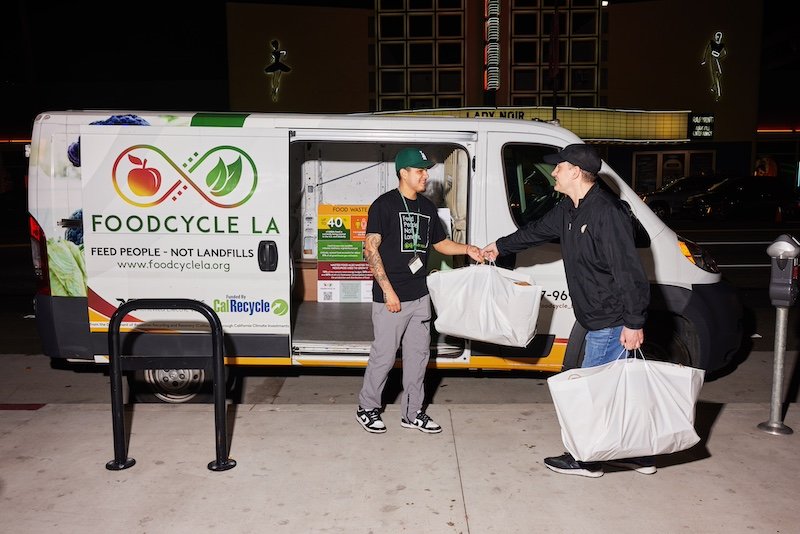
Every day in Los Angeles, high-quality surplus food is discarded while families across our communities struggle with food insecurity. FoodCycle was created to help bridge that gap — connecting businesses with nonprofits and community organizations to ensure good food feeds people, not landfills.
For restaurants, food donation is no longer just a charitable effort. Under California’s SB 1383 regulations, many businesses are now required to recover edible food and keep records of their donations. The good news is that food recovery can be simple, compliant, and deeply impactful when supported by the right partners and systems.
This guide explains how restaurants can safely and efficiently donate surplus food, comply with SB 1383 requirements, reduce environmental impact, and support local communities through FoodCycle’s food recovery network.
Key Takeaways
- SB 1383 requires many California businesses to recover edible food for human consumption.
- Federal and California Good Samaritan laws protect food donors acting in good faith.
- Food donation helps reduce methane emissions by diverting edible food from landfills.
- Partnering with FoodCycle simplifies pickups, compliance reporting, and donation tracking.
- Food recovery strengthens communities while helping businesses meet sustainability goals.
Table of Contents
-
Why Los Angeles Restaurants are Prioritizing Food Donation in 2026
-
Partnering with FoodCycle LA for Seamless Surplus Management
Why Los Angeles Restaurants are Prioritizing Food Donation in 2026
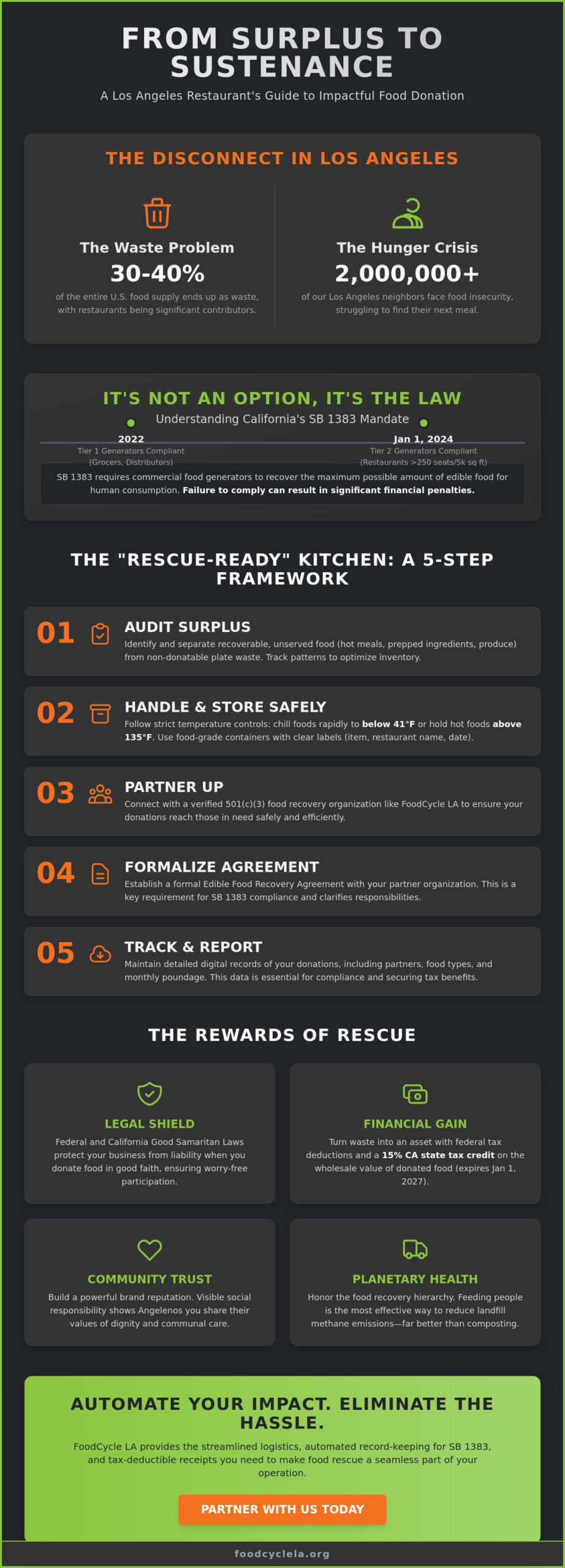
Hunger is a choice. Waste is a failure of imagination. In Los Angeles, the surplus from our kitchens often ends up in landfills while over 2 million of our neighbors struggle to find their next meal. This isn’t just a tragedy; it’s a systemic inefficiency we can solve through creative, urgent action. Between 30% and 40% of the food waste in the United States happens because we lack the logistical bridges to redirect quality ingredients. For a local chef or business owner—including those at innovative brands like Tacoverse—food donation is no longer just a "nice to do" gesture. It is a vital intervention in our local circular economy that transforms potential methane into community wellness.
The Reality of SB 1383 Compliance in LA
The era of optional food recovery is officially over. California’s SB 1383 mandates that commercial edible food generators recover the maximum amount of food possible for human consumption. We are now well past the implementation deadlines. Tier 1 generators, including grocery stores and distributors, have been under mandate since 2022. Tier 2 generators, which include restaurants with over 250 seats or 5,000 square feet, were required to be fully compliant by January 1, 2024. Compliance requires more than just good intentions. You must maintain detailed records of a contract with your food recovery partners, the types of food donated, and the monthly poundage. Failure to comply doesn’t just hurt the community; it carries the risk of significant financial penalties from local organic waste ordinances. We help you navigate these mandates by providing the infrastructure needed to stay compliant without the administrative headache.
Beyond the Bin: The Social ROI of Donation
When we redirect surplus, we build something more valuable than a clean bin. We build community trust. Visible social responsibility is a powerful currency for any brand in 2026. Angelenos want to support businesses that reflect their values of dignity and communal care. This work also strengthens your bottom line. By participating in food rescue, you turn potential waste into a tax-deductible asset. Qualified donors can leverage federal deductions or the California state tax credit, which currently offers 15% of the wholesale market price for donated produce and processed foods. This credit is currently set to expire on January 1, 2027, making it imperative to establish your donation systems now. We don’t just see a reduction in landfill methane; we see an increase in the resilience and health of our entire city. It’s about moving from a linear "take-make-dispose" model to a circular system where every ingredient serves its highest purpose: nourishing people.
How to Reduce Food Waste in Restaurants Through Donation
Kitchens are high-pressure environments. Every second counts. Yet, in the rush of service, we often overlook the gold sitting in our steam tables or walk-ins. We must stop viewing surplus as an inevitable cost of doing business and start seeing it as a vital resource. By understanding the environmental impact of food waste, we can shift from a "toss it" mentality to a "rescue-ready" culture. This transition requires a standardized 5-step framework that integrates seamlessly into your nightly close-out.Five Steps to Food Recovery
-
- Identify edible surplus.
-
Follow safe storage practices.
-
Partner with a qualified food recovery organization.
-
Maintain required documentation.
-
Integrate food recovery into daily operations.
Step 1: Identifying Recoverable Surplus
Not all leftovers are created equal. Plate waste, which is anything that has touched a customer’s table, must be composted. However, unserved surplus is prime for donation. This includes prepared hot foods that haven’t been served, chilled ingredients, and over-prepped produce. We recommend a "bin audit" for one week. Track what you throw away. If you find consistent surpluses of specific items, adjust your inventory management to minimize waste before it happens. For everything else, if it’s wholesome and fit for human consumption, it’s rescue-ready.
Step 2: Proper Handling and Storage
Safety is non-negotiable. To protect the dignity of the recipient and the integrity of your brand, follow strict temperature controls. Hot foods must be rapidly chilled to below 41°F or maintained above 135°F until pickup. Use clean, food-grade containers. Every package needs a clear label including the item name, your restaurant’s name, and the date it was prepared. This transparency is essential for receiving nonprofits. If you need help establishing these protocols, our team at FoodCycle can provide staff training and the guidance to make your kitchen a model of efficiency.
Step 3: Finding a Reliable Food Rescue Partner
Professional logistics make the difference between a successful program and a chaotic one. Don’t rely on random drop-offs. Vet local 501(c)(3) organizations that offer technology-driven recovery. This ensures your surplus is tracked and redirected with speed. Under SB 1383, you’re required to have a formal "Edible Food Recovery Agreement" in place. This document protects your business and provides the record-keeping data necessary for local audits. We act as your visionary doers, managing the logistics so your staff can focus on the next service while we strengthen the local food system.
Navigating Food Donation Liability and Safety in California
For many chefs, the primary barrier isn’t logistics; it’s a deep-seated fear of litigation. We hear it constantly: "What if someone gets sick?" It’s time to dismantle this myth with cold, hard facts. In the history of the United States, there has never been a single documented instance of a food donor being successfully sued for food poisoning. The legal landscape is designed to encourage your generosity, not punish it.
By participating in surplus recovery, you are protected by two robust layers of legislation. The federal Bill Emerson Good Samaritan Food Donation Act provides a national baseline of protection for donors who act in good faith. California further strengthens this through Civil Code Section 1714.25. This state law explicitly shields any food facility from liability for injury resulting from the consumption of donated food, provided the food was fit for human consumption at the time of donation. Unless there is evidence of gross negligence or intentional misconduct, your business is legally insulated.
The Good Samaritan Act: Your Legal Shield
Protection is a right, not a gamble. To qualify for federal and state shields, you must simply meet three criteria: the donation must be made to a nonprofit in good faith, the food must be wholesome, and you must follow standard safety protocols. It’s that simple. We help you maintain this protection by formalizing the safety hand-off. When we facilitate your donation, we help establish a clear chain of custody. This documentation proves your compliance with safety standards and creates a verified record of your good-faith efforts. Professional recovery services act as your logistical witness, ensuring that your surplus reaches those in need without compromising your business’s security.
California Safety Standards for Donated Food
Safety is the foundation of dignity. Donating food doesn’t mean lowering your standards; it means extending the life of your best work. Under the California Retail Food Code, you should treat donated surplus with the same rigor as the meals you serve to paying guests. This includes maintaining proper temperature logs and using clean, food-grade packaging. Training your staff on these "donation-safe" procedures is your best defense. When your team knows how to label and store surplus correctly, they aren’t just following rules; they’re participating in a vital intervention. Keeping detailed logs of what was donated and when it was picked up serves as both a compliance tool for SB 1383 and a legal safeguard. It’s about creating a transparent, circular system that values human health and environmental resilience equally.
The Environmental Impact: Why Donation Beats Composting
Recovering edible food keeps valuable resources in use while reducing methane emissions associated with landfill disposal. Food recovery supports both environmental sustainability and community well-being, making it one of the most effective waste reduction strategies available to businesses.
Partnering with FoodCycle for Seamless Surplus Management
FoodCycle helps businesses recover edible food through a technology-enabled network of drivers, volunteers, nonprofit partners, and community organizations across Los Angeles County. Through scheduled pickups, impact tracking, compliance support, and redistribution services, FoodCycle makes food recovery simple and effective for businesses of all sizes.
In 2025 alone, FoodCycle recovered more than 11 million pounds of food, helping provide millions of meals while reducing greenhouse gas emissions associated with food waste.
Start Your Food Rescue Journey Today
Beginning your program is a simple, transformative step. When you reach out, our team works with you to establish a pickup schedule that fits your operational flow. We provide the training resources your staff needs to feel confident in the process. Beyond daily recovery, we offer deeper ways to engage through corporate sponsorships and staff volunteer opportunities that foster a culture of communal care within your team. We are ready to help you strengthen the local food system. Join the mission and start your restaurant food donation program today. Together, we can ensure that every meal serves its highest purpose.
Transform Surplus into Community Impact
Food recovery creates benefits that extend far beyond waste reduction. By donating edible surplus food, businesses can support local communities, strengthen sustainability efforts, and contribute to a more resilient food system. FoodCycle helps make that process simple through logistics support, compliance assistance, impact reporting, and connections to nonprofit partners across Los Angeles County.
Together, we can feed people, reduce waste, and build a stronger future for our communities and our planet.
Frequently Asked Questions
Is it legal to donate leftover restaurant food in Los Angeles?
Yes, it’s fully legal. Donating wholesome surplus is a protected and encouraged practice. Both federal and state laws establish a clear framework that allows businesses to redirect edible meals to those in need. This legal structure ensures that your surplus serves a higher purpose rather than becoming environmental waste.
Does my restaurant get a tax deduction for food donations?
Your business can absolutely claim tax benefits. Donations to 501(c)(3) organizations like ours are tax-deductible as allowed by law. You can leverage federal deductions or the California state tax credit, which currently covers 15% of the wholesale market price for qualified products. This credit is currently scheduled to remain active until January 1, 2027. In addition, donating food instead of discarding it into the trash may help reduce your waste hauling fees, particularly when you coordinate your disposal requirements with a professional service like LA Dumpster Bins.
What kind of food can my restaurant donate to FoodCycle?
We accept unserved surplus. This includes prepared hot meals, chilled ingredients, over-prepped produce, and baked goods. The primary requirement is that the food must be wholesome and fit for human consumption at the time of donation. Because FoodCycle works with more than 300 nonprofit partners, we are able to find a home for almost any type of food
How does SB 1383 affect my small restaurant business in LA?
Regulations are shifting. While Tier 2 mandates already apply to restaurants with over 250 seats or 5,000 square feet, all businesses should prepare for stricter organic waste ordinances. Establishing a system for donation now ensures you stay ahead of local enforcement. We provide the verified compliance reporting you need to meet these evolving standards.
Who is liable if someone gets sick from donated restaurant food?
Donors are legally protected. The Bill Emerson Good Samaritan Food Donation Act and California Civil Code Section 1714.25 shield you from liability. As long as you act in good faith and follow standard safety protocols, you aren’t held responsible for injuries resulting from consumption. There has never been a successful lawsuit against a food donor in the United States.
Can I donate prepared hot food that wasn’t served?
Yes, unserved hot food is highly valuable. It must be handled according to the California Retail Food Code, which means maintaining safe temperatures or rapidly chilling it before pickup. This "rescue-ready" approach ensures that your best work reaches the community safely. We help you establish these protocols to make the process effortless for your kitchen staff.
How do I get a receipt for my food donation for tax purposes?
We automate the documentation process. We keep your data organized so you can focus on service. At the end of each year, we will provide you with a receipt for your donations.
Does FoodCycle provide containers for food donation pickups?
Logistics should never be a barrier. We recommend using standard food-grade, clean containers that your kitchen already utilizes for storage. During our initial onboarding, we’ll coordinate with your team to establish the most efficient packaging workflow for your specific needs. Our goal is to integrate into your existing close-out routine without adding unnecessary complexity.